
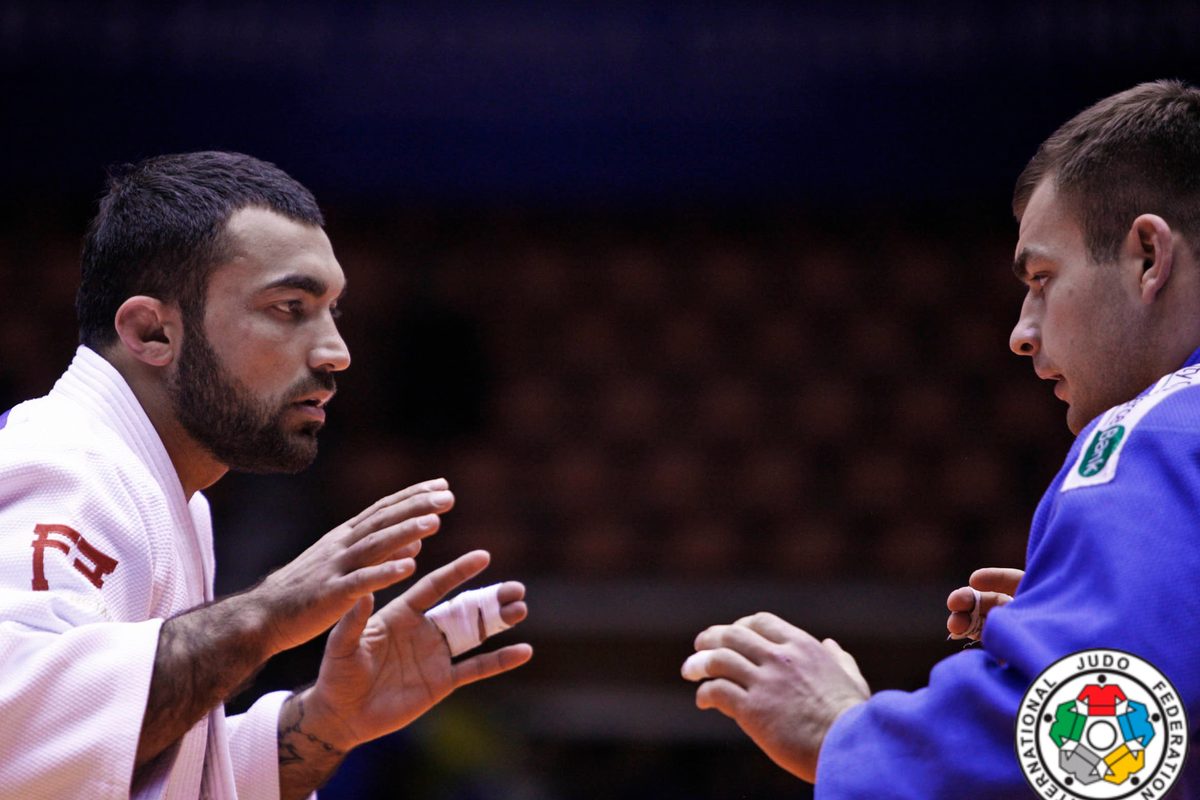
Most BJJ players have a hole in their standing game
Walk into a typical Brazilian Jiu-Jitsu class and the round starts from the knees. It is efficient and it keeps the mat safe, but it quietly skips the first fifteen seconds of any real exchange. Two grapplers who both want the takedown and neither of whom has trained one end up flopping to guard.
Judo is the specialist at exactly that phase. It is a full art built around the moment two people grab each other standing up and one of them ends up on their back with the other on top.
Grip fighting transfers directly
Judo's grip fighting is the most immediately useful thing a Jiu-Jitsu player can borrow. Judoka spend years learning to win the sleeve and collar, to break a dominant grip, to stop an opponent from getting the grip they want in the first place.
That skill does not stay standing. The same understanding of angles, wrist control and posture-breaking shows up in your guard, in your passing, and in every Gi position where the fabric is the weapon.
Top position, for free
In Judo, the throw is the point — and a clean throw hands you the top position without a scramble. For a Jiu-Jitsu competitor, that means points on the board and the match starting from the position you wanted.
There is also the pressure element. Judo's ground work rewards fast, heavy pins, so judoka tend to develop crushing top pressure and a strong instinct to hold a position rather than chase a submission. Jiu-Jitsu players who add Judo become much harder to sweep.
Falling safely is the underrated part
Breakfalling — ukemi — is the first thing every Judo beginner learns and the thing they drill for years. It stops throws from hurting, and it carries far beyond the mat: onto a wet floor, off a bike, down a set of stairs.
For older adults starting martial arts, this alone is worth the class. Knowing how to hit the ground without putting a hand out and breaking a wrist is a genuinely life-changing skill.
And it works the other way too
Judoka who cross-train Jiu-Jitsu get a ground game that does not stop when the referee would call matte. Newaza in a BJJ room is longer, more patient and far more submission-heavy, and a judoka who spends time there stops fearing the bottom position.
The two arts share a root — Judo is where Brazilian Jiu-Jitsu came from — so nothing you learn in one contradicts the other. It is one system that competition rules split in half.
How we train both in Winter Haven
Our academy runs Gi and No-Gi Brazilian Jiu-Jitsu and traditional Gi Judo inside the same membership, taught by a Judo and BJJ black belt and a Master of Sport of International Class in Judo with 16 years on the Ukrainian National Team and wins over Olympic champions.
Wednesday is the dedicated Judo day across the kids, homeschool and adult classes, and Friday evening finishes the week with an adult open mat where the throws get put back into full rounds. Beginners start with falling, not throwing — your first class is free.